
On Deus Ex Machina: Criticisms of an Ancient Plot Device

Updated: Mar 8, 2023
To say that I am a sucker for happy endings would be a lie.
The superhero makes his perfectly-timed entrance, the high school sweethearts drive off into the sunset at the end of the film. Oddly enough, I tend to gravitate away from these tropes—the lack of ambiguity and rough edges seems too good to be true, even if it is a Hallmark Christmas movie.
My inner cynic argues that life, and the entirety of organisms walking its course, must also be subject to the law of entropy—the gradual convergence towards disorder. Life doesn't come in a neatly-packaged bow, like deus ex machina suggests. We cannot rely on a perfectly-timed, omniscient third-person to amend all conflict in one fell swoop.
Originating in ancient Greek theater, deus ex machina is a plot device (thought to have been coined by Aristotle) which gained popularity when actors began to play gods who remedied seemingly-impossible predicaments. These actors entered the stage using cranes or trapdoors—machines—to deliver their solutions, leading to the quote's rough translation from Latin, 'god from the machine.'
So why deus ex machina as the title for this blog?
To me, deus ex machina is a near-unattainable ideal rather than a plausibility. Whether there is an omniscient third person who amends all conflict in one fell swoop is entirely up to chance, which leaves the remaining players on the world stage, with their exits and entrances, to create their own phenomena; their own deorum ex machina. Rather than being the antithesis of my worldview, I find that the saying serves as a reminder to avoid settling for complacency, and to actively seek discomfort and improvement no matter how arduous the situation may be.
Welcome to deus ex machina! On this blog, I hope to write about things which interest me, from Shakespeare to Freud to Christopher Nolan films:) I hope you enjoy your stay!

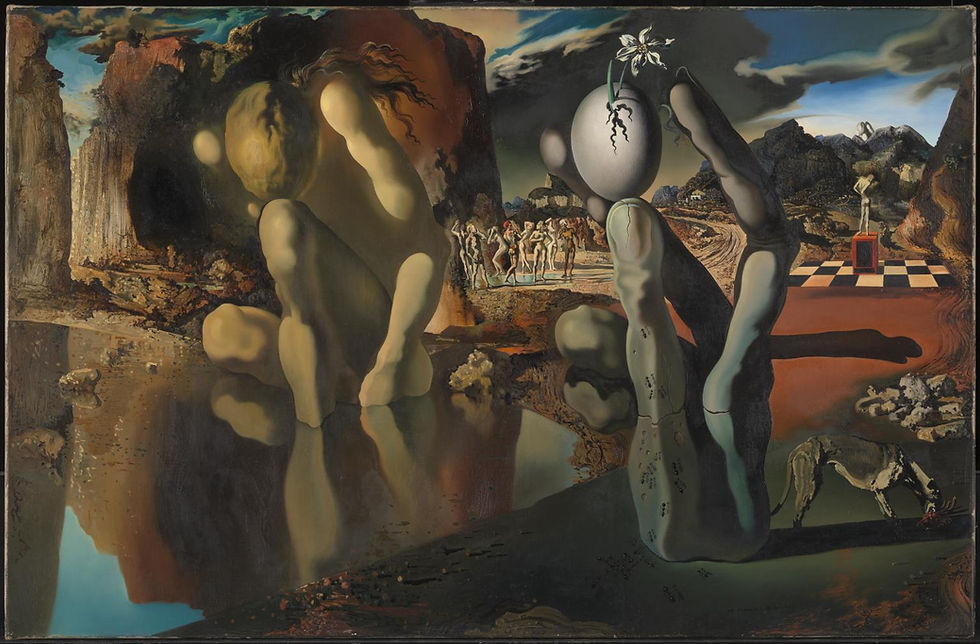
Image Credit: Google Images


Comments